




Electric Apparel vs Traditional Thermal Wear for Winter Motorcycle Commuting
Winter motorcycle commuting in an urban environment presents a specific clothing challenge: you need warmth without excessive bulk, reliable protection against wind and rain, and enough freedom of movement to control your bike safely through traffic.
Traditional thermal wear remains a practical foundation. However, electric apparel—including heated gloves, heated jackets, heated vests, and heated base layers—can provide a more targeted and adjustable solution when temperatures drop or commutes become longer.
So, which option is better for urban motorcycle commuting: traditional thermal wear or heated clothing?
The answer depends on your route, weather conditions, commute length, comfort priorities, and how much control you want over your body temperature. In many cases, the most effective solution is not choosing one over the other, but combining both.
Table of Contents
- What Is the Difference Between Electric Apparel and Thermal Wear?
- Traditional Thermal Wear for Urban Motorcycle Commuting
- Electric Apparel for Winter Motorcycle Riding
- Electric Apparel vs Thermal Wear: Side-by-Side Comparison
- Which Option Is Best for Different Commuting Conditions?
- Why Heated Gloves Matter in City Traffic
- How to Combine Heated Clothing with Traditional Layers
- Safety and Practical Considerations
- Frequently Asked Questions
- Key Statistics
- Conclusion
What Is the Difference Between Electric Apparel and Thermal Wear?
Traditional thermal wear uses insulation, fabric structure, and moisture management to retain the body’s natural heat. Common examples include:
- Merino wool base layers
- Synthetic thermal shirts and leggings
- Insulated motorcycle jackets
- Thermal socks
- Fleece mid-layers
- Windproof and waterproof outer shells
Electric apparel uses integrated heating elements powered by rechargeable batteries or a motorcycle electrical system. Depending on the garment, heat may be directed toward the chest, back, shoulders, hands, fingers, or feet.
The fundamental difference is simple:
- Thermal wear helps retain existing body heat.
- Electric apparel actively adds controlled warmth.
Traditional clothing is passive. Once you put it on, its performance depends largely on the insulation, fit, and weather protection of the garment. Heated apparel gives you the option to adjust warmth during the ride, which is particularly useful when moving between cold, shaded streets and warmer indoor destinations.
"A base, mid, and outer layer system can trap heat, manage moisture, and protect riders from the elements" — Triumph Motorcycles
Traditional Thermal Wear for Urban Motorcycle Commuting
Traditional thermal wear has several advantages for everyday riders.
It is simple and dependable
Thermal base layers do not require charging, cables, switches, or batteries. They are ready to use whenever needed and can be washed according to their care instructions.
For a short commute across a relatively mild city, a thermal shirt, warm socks, and a windproof motorcycle jacket may provide all the insulation required.
It works well as part of a layering system
A typical urban winter riding system might include:
- A moisture-wicking thermal base layer
- A fleece or insulated mid-layer
- A protective motorcycle jacket
- A waterproof outer shell when necessary
- Thermal socks and insulated motorcycle gloves
This approach is versatile because individual layers can be removed after arriving at work. It also avoids relying on a single garment for warmth.
It can become bulky
The main limitation is that adding warmth often means adding fabric. Multiple thick layers may restrict movement, compress protective armor, or create pressure around the shoulders and elbows.
Bulky clothing can also make it more difficult to move naturally when checking blind spots, steering through traffic, or placing both feet firmly on the ground at a stop.
It may not address cold hands effectively
Your torso can feel comfortable while your fingers remain painfully cold. Traditional gloves may provide insulation, but the hands are continuously exposed to airflow and are in direct contact with cold handlebars.
For riders commuting in colder conditions, keeping the hands warm is not only a comfort issue. Cold fingers can make operating levers, switches, and controls feel more difficult.
Electric Apparel for Winter Motorcycle Riding
Electric apparel is designed to provide warmth exactly where it is needed.
Depending on the product, heating elements may be positioned around the:
- Chest
- Upper back
- Lower back
- Shoulders
- Neck
- Backs of the hands
- Fingers and fingertips
- Feet or insoles
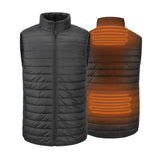
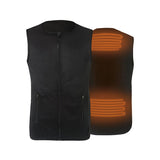
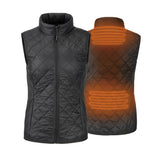
30seven heated clothing includes jackets, bodywarmers, base layers, gloves, socks, and insoles designed for outdoor use. Its heated bodywarmer, for example, is described as thin and compact enough to wear under or over other clothing, with heating zones around the neck, shoulders, kidneys, and lower back. citeturn0search1
Adjustable warmth for changing conditions
Urban commutes can vary significantly. A rider may leave home before sunrise, spend time in slow traffic, and then ride home during a warmer afternoon.
Adjustable heating allows you to:
- Start on a higher setting in very cold conditions
- Reduce heat once your body warms up
- Use lower power during less exposed sections of the route
- Increase warmth again when wind chill becomes noticeable
This flexibility can be more comfortable than wearing the maximum amount of insulation for the entire journey.
Less bulk under motorcycle protection
A thin heated vest or base layer can add warmth without requiring several thick garments. This can help preserve the fit of a motorcycle jacket and reduce the feeling of restricted movement.
However, heated apparel should never replace certified motorcycle protection. Armor, abrasion-resistant materials, gloves, boots, and a suitable helmet remain essential.
Battery management is part of the routine
Electric apparel requires more preparation than traditional clothing. Before commuting, riders should check:
- Whether the batteries are fully charged
- How long the selected heat setting is expected to last
- Whether the battery compartment is securely closed
- Whether cables are positioned safely and comfortably
- Whether the garment is compatible with the motorcycle jacket
30seven states that some heated gloves offer up to seven hours of battery life on a low setting and approximately two and a half hours on a high setting, although actual performance depends on the product, temperature, and usage conditions. citeturn0search2
📊 Up to 7 hours on low heat and approximately 2.5 hours on high heat for a selected 30seven model - Heated glove battery life
Electric Apparel vs Thermal Wear: Side-by-Side Comparison
| Feature | Traditional Thermal Wear | Electric Apparel |
|---|---|---|
| Heat source | Retains body heat | Adds active warmth |
| Battery required | No | Usually yes |
| Temperature adjustment | Limited to adding or removing layers | Multiple heat settings |
| Bulk | Can increase with colder conditions | Often provides targeted warmth with fewer layers |
| Setup | Simple | Requires charging and battery checks |
| Best for | Mild-to-cold conditions and flexible layering | Persistent cold, longer commutes, and cold-sensitive riders |
| Hands and feet | Depends on insulation quality | Can provide direct heat to fingers, hands, socks, or insoles |
| Maintenance | Standard garment care | Battery removal and product-specific care required |
| Weather protection | Depends on the outer garment | Heating does not automatically mean waterproofing |
| Long-term use | No battery replacement | Battery condition affects performance |
The comparison shows that neither category is universally superior. Thermal wear offers simplicity and independence from batteries. Electric apparel offers control and targeted warmth.
Which Option Is Best for Different Commuting Conditions?
Short commutes in cool but moderate weather
For a 15- to 25-minute urban commute in above-freezing conditions, traditional thermal wear may be sufficient. A breathable base layer, wind-resistant jacket, warm gloves, and suitable socks can provide a practical solution.
If your route includes frequent stops, your body may generate enough heat to remain comfortable without active heating.
Long commutes in consistently cold weather
For longer journeys, especially those involving faster roads or exposed bridges, electric apparel becomes more attractive. Continuous airflow can gradually overwhelm passive insulation, even when the rider is wearing several layers.
A heated vest or bodywarmer can provide warmth to the core, while heated gloves address the hands, which are often among the first areas to become uncomfortable.
Wet, windy, or highly exposed routes
Windproof and waterproof outer layers remain essential. Heating elements do not automatically protect against rain or wind.
The most effective combination is usually:
- Moisture-wicking base layer
- Heated mid-layer or bodywarmer
- Protective motorcycle jacket
- Waterproof outer shell when needed
- Heated or heavily insulated gloves
Stop-and-go city traffic
Urban traffic creates a different thermal pattern from highway riding. At low speeds, wind chill may be lower, but riders can still become cold because they spend more time exposed to low ambient temperatures.
At traffic lights, cold hands and stiff fingers may be particularly noticeable. Heated gloves can provide a direct source of warmth without requiring several thick glove liners.
Sensitive-to-cold riders
Some commuters feel cold more quickly than others. For them, electric apparel can make winter riding more manageable by providing targeted warmth without forcing them to wear excessively bulky layers.
This does not mean heated clothing should be viewed as medical treatment. Riders with circulation concerns or health conditions should seek professional medical advice before relying on heated products for therapeutic purposes.
Why Heated Gloves Matter in City Traffic
For many motorcycle commuters, hands are the deciding factor between riding comfortably and abandoning the trip.
Traditional thermal gloves can help, but they face three challenges:
- The hands are directly exposed to moving air.
- The fingers are close to cold controls and handlebars.
- Thick insulation can reduce tactile feedback and dexterity.
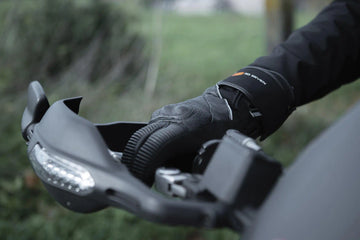
Heated motorcycle gloves can distribute warmth across the back of the hand, fingers, or fingertips, depending on the design. 30seven’s heated glove range includes products intended for outdoor riding and features such as multiple heat levels, insulation, and weather-resistant construction. citeturn0search2turn0search3
When selecting heated gloves for urban commuting, look for:
- A secure fit that does not restrict lever control
- Reinforced palms
- Knuckle protection where appropriate
- Weather-resistant materials
- Clearly accessible controls
- Adequate battery placement
- Compatibility with your jacket cuffs
- Enough battery life for the complete commute
Warm hands can make it easier to operate controls naturally, but heated gloves must still fit correctly and must not interfere with protective equipment.
How to Combine Heated Clothing with Traditional Layers
The best winter motorcycle commuting system is often a hybrid one.
Recommended layering order
Layer 1: Moisture management
Use a close-fitting base layer that moves perspiration away from the skin. Avoid cotton as the only base layer because damp fabric can make you feel colder.
Layer 2: Active warmth
Place a heated base layer, vest, or bodywarmer over the first layer, following the manufacturer’s instructions. A thin heated layer is often more practical than attempting to heat several thick garments.
Layer 3: Motorcycle protection
Wear a properly fitted motorcycle jacket with appropriate impact and abrasion protection. Make sure the heated garment does not compress or reposition the armor.
Layer 4: Weather protection
Add a waterproof or windproof shell when conditions require it. This outer layer helps prevent wind from carrying away the warmth generated by the heated garment.
Extremities
Complete the system with suitable motorcycle boots, thermal or heated socks, and protective gloves. Avoid layering socks so heavily that they restrict circulation inside the boots.
30seven recommends removing batteries before washing heated products and following the specific care instructions for each garment. citeturn0search3
Safety and Practical Considerations
Warmth should support safe riding, not replace it.
Do not overheat
Active heating can make riders uncomfortable if used at maximum power throughout the entire journey. Start with a moderate setting and adjust it according to conditions.
Excessive heat may also encourage sweating. Moisture trapped beneath riding gear can later make you feel colder when the heating is reduced.
Check battery placement
Batteries should remain secure and should not create pressure points when you sit in your riding position. Keep cables organized and ensure they cannot interfere with steering, controls, or movement.
Preserve protective equipment
Heated apparel is an insulation layer, not a substitute for motorcycle safety gear. Make sure your jacket, trousers, gloves, boots, and helmet remain correctly fitted.
Check the road, not just the clothing
Cold weather can bring hazards that clothing cannot solve, including ice, frost, wet leaves, reduced visibility, and lower tire grip. If conditions are unsafe, postponing the ride may be the best decision.
Cold-weather riding guidance from the U.S. Army Safety Office also emphasizes preparing the rider, motorcycle, and route, while noting that layered clothing and electrically heated riding equipment can help maintain warmth. citeturn0search4
Frequently Asked Questions
Is electric apparel better than traditional thermal wear for motorcycle commuting?
Electric apparel is often better when you need adjustable, targeted warmth during long or consistently cold commutes. Traditional thermal wear is simpler, requires no charging, and may be sufficient for shorter journeys or moderate temperatures. Many riders benefit from combining both.
Can heated clothing replace a thermal base layer?
Usually, no. A thermal base layer can wick moisture and provide insulation, while heated apparel adds warmth. Using both can create a more flexible system, provided the garments fit comfortably under protective motorcycle gear.
Are heated gloves useful for short urban rides?
They can be, particularly when cold hands affect comfort or control. For a very short ride in moderate conditions, traditional insulated gloves may be enough. In colder weather, heated gloves can provide warmth more quickly and consistently.
How long do heated clothing batteries last?
Battery life depends on the garment, heat setting, ambient temperature, battery condition, and usage. Lower settings generally last longer than maximum heat. Always check the manufacturer’s specifications and charge the batteries before commuting.
Is heated apparel waterproof?
Not automatically. Some heated garments are water-resistant or designed for outdoor use, but heating capability and waterproof protection are separate features. Always check the product specifications and use a suitable waterproof outer layer when necessary.
Key Statistics
📊 Up to 7 hours of battery life on the low setting is listed for a selected 30seven heated glove model.
Source: 30seven product information
⚡ Three heat levels—low, medium, and high—are available on selected 30seven heated gloves, allowing riders to adjust warmth during a commute.
Source: 30seven product information
🧥 Four heating zones are listed for the 30seven heated bodywarmer, including the neck, shoulders, kidneys, and lower back.
Source: 30seven product information
🛡️ Two-year product warranty coverage for the working of the product is stated by 30seven, alongside a separate battery warranty period.
Source: 30seven product information
Conclusion
For winter motorcycle commuting in urban environments, the choice between electric apparel and traditional thermal wear is not necessarily an either-or decision.
Traditional thermal wear remains a dependable foundation: it is simple, washable, versatile, and independent of batteries. Electric apparel adds a different advantage by delivering active, adjustable warmth to the areas most affected by cold, including the chest, back, hands, fingers, and feet.
For mild conditions and short journeys, thermal layers may be all you need. For longer commutes, colder cities, exposed roads, or riders who regularly suffer from cold hands, heated clothing can provide a meaningful improvement in comfort and control.
The most versatile approach is a layered system combining moisture management, targeted 30seven heated apparel, certified motorcycle protection, and weather-resistant outerwear. With the right setup, you can stay warmer without unnecessary bulk and make cold-weather commuting more comfortable throughout the season.


