




Best Heated Gear for Skiing in the French Alps: A 2026 Performance Review

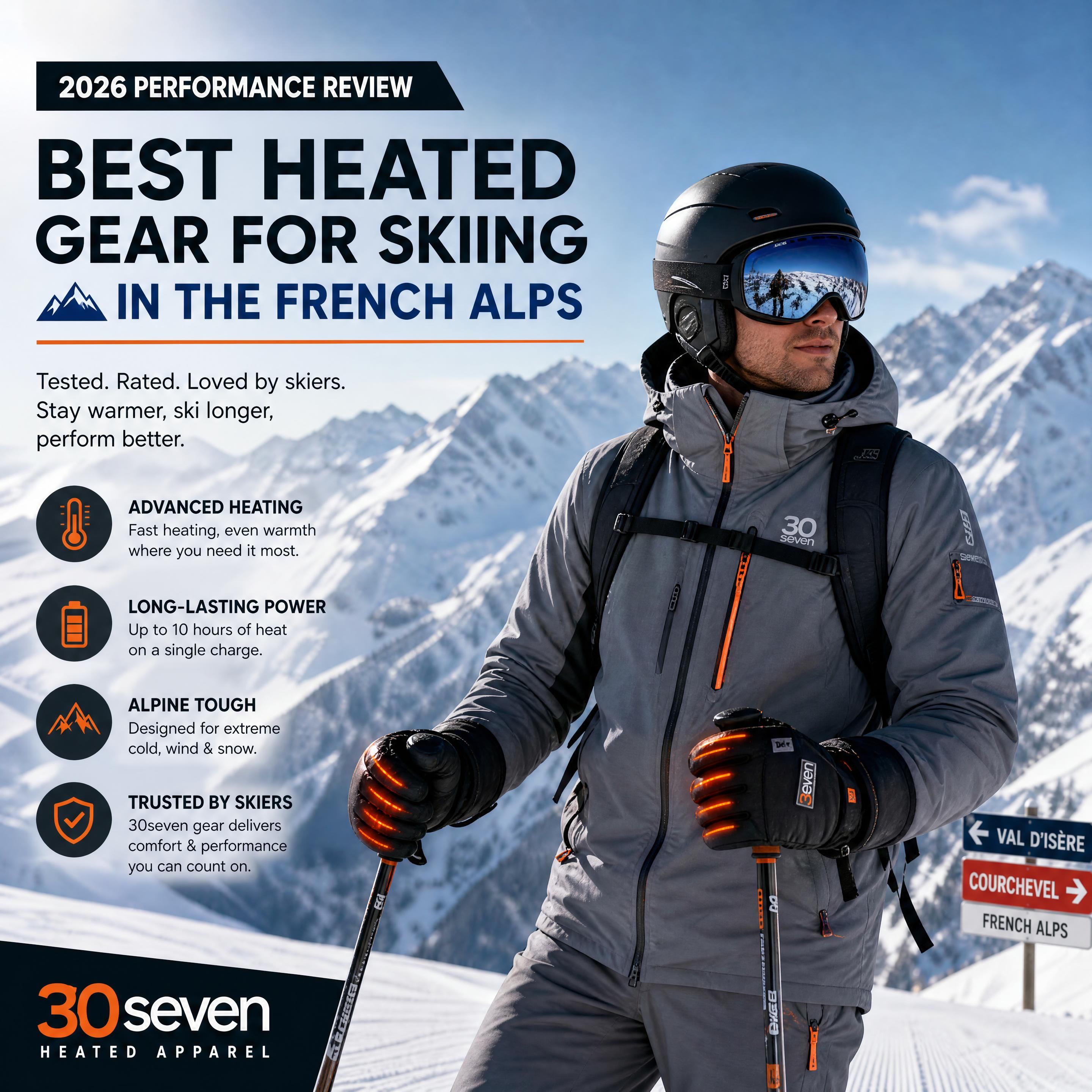
Skiing in the French Alps demands more than a warm jacket. From an early-morning chairlift in Chamonix to a windy summit in Val Thorens, temperatures, wind exposure and snow conditions can change rapidly throughout the day. The best heated gear for skiing helps maintain comfort without restricting movement, adding unnecessary bulk or compromising your regular ski layers.
For 2026, the most practical approach is to use heated apparel strategically: heated gloves for exposed fingers, heated socks for cold toes and, when conditions are particularly harsh, a heated jacket or vest as an adjustable mid-layer.
This performance review examines the features that matter most for skiing in the French Alps and explains where 30seven heated apparel performs particularly well.
📊 Temperatures and snowfall can vary significantly between resort villages, mid-mountain terrain and high-altitude pistes - French Alps winter conditions
Table of Contents
- What Makes Heated Gear Suitable for Alpine Skiing?
- Best Heated Gear for Skiing in the French Alps
- 30seven Heated Apparel: 2026 Performance Review
- How to Choose Heated Gear for Different Alpine Conditions
- Battery Life and Practical Ski-Day Performance
- How to Wear Heated Clothing with a Ski Layering System
- Care and Safety Tips
- Questions Fréquentes
- Chiffres Clés
- Conclusion
What Makes Heated Gear Suitable for Alpine Skiing?
The best heated clothing for skiing needs to do more than generate warmth. It must work with a technical layering system and remain comfortable during movement, lift rides and long periods of exposure to cold air.
When comparing heated gloves, heated socks and heated jackets, focus on five performance criteria:
1. Targeted heat distribution
Heating elements should be positioned where skiers actually lose comfort. In gloves, warmth around the back of the hand, fingers and fingertips is particularly valuable. For socks, heating around the toes can make a noticeable difference during long lift rides or static periods.
2. Adjustable temperature control
A high setting may be useful at the start of the day, but it can become excessive during intense skiing. Multiple temperature levels allow you to reduce heat while moving and increase it when waiting at altitude.
3. Battery endurance
A heated garment that lasts only a short time at maximum power may not be practical for a full day in the mountains. Look for realistic battery information across low, medium and high settings rather than relying only on the longest advertised runtime.
4. Weather protection
Heating cannot replace insulation or waterproofing. Ski gloves still need protection from snow, wind and moisture, while heated jackets should be worn beneath a weather-resistant outer shell.
5. Dexterity and fit
Bulky gloves can make it difficult to adjust bindings, handle poles or operate zippers. A heated jacket that fits too tightly may also reduce insulation and restrict movement.
Best Heated Gear for Skiing in the French Alps
The right setup depends on your cold sensitivity, activity level and destination. A recreational skier in Méribel may need a different combination from a ski tourer spending hours outside Chamonix.
| Skiing need | Recommended heated gear | Why it matters |
|---|---|---|
| Cold fingers on chairlifts | Heated gloves | Direct warmth for hands and fingertips |
| Cold toes or reduced foot comfort | Heated socks | Targeted warmth inside ski boots |
| Very cold, windy conditions | Heated jacket or vest | Adjustable warmth across the torso |
| Ski touring or stop-start activity | Lightweight heated mid-layer | Helps manage temperature changes |
| Full-day resort skiing | Gloves plus spare batteries | Balances warmth and battery reliability |
Best Heated Gloves for Skiing
For most skiers, heated gloves offer the greatest immediate benefit. Hands are exposed to wind and cold, and they remain relatively inactive while riding lifts or waiting in queues.
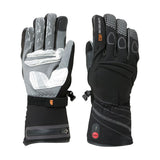
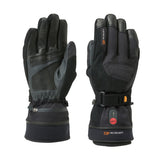
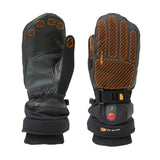
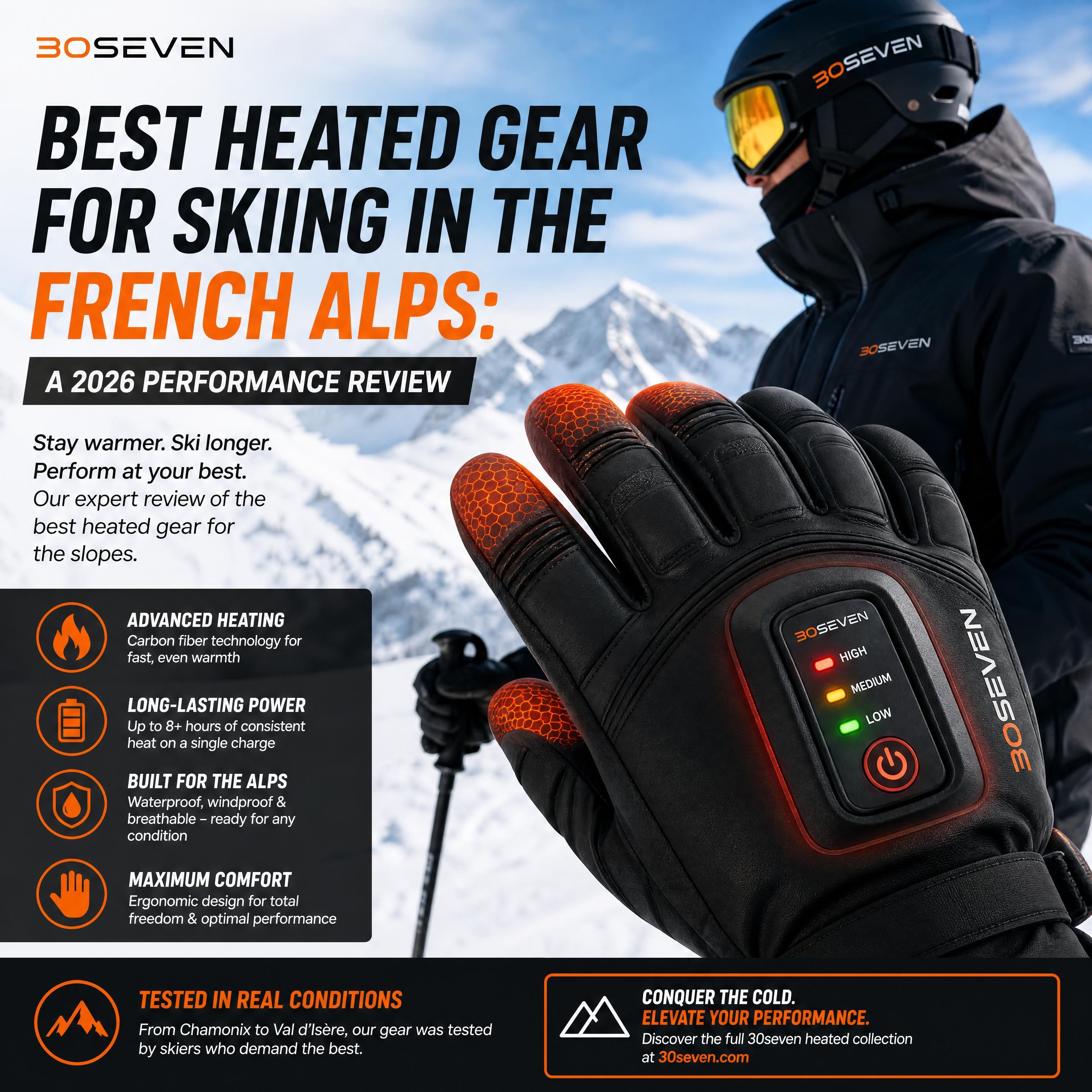
30seven heated gloves use Novaheat technology, rechargeable lithium-ion batteries and push-button temperature control. Depending on the model, users can select from two or three heating levels. Several models are designed to provide warmth around the back of the hand, fingers and fingertips rather than concentrating heat in only one area.
That design is especially relevant for skiing in the French Alps. A cold chairlift ride at altitude can quickly reduce hand comfort, even when the rest of your body feels warm.
Performance strengths
- Multiple heat settings for changing weather conditions
- Rechargeable batteries designed for repeated use
- Practical push-button controls
- Insulated construction for warmth even when the heating system is turned off
- Options for waterproof, leather, reinforced or convertible designs
- Suitable for resort skiing, winter travel and other outdoor activities
For technical downhill skiing, choose a model with enough room for comfortable movement but avoid sizing so large that the heating zones sit away from your hands. Your fingers should reach the ends of the glove without being compressed.
Best Heated Socks for Skiing
Cold feet can ruin an otherwise excellent ski day. Tight ski boots, limited circulation and long periods sitting on lifts can all contribute to discomfort.
Heated socks are designed to provide warmth around the toes while remaining compatible with ski boots. The most important considerations are thickness, moisture management and battery placement. A heated sock should not create pressure points or make your boot fit excessively tight.
When using heated socks:
- Wear a single pair of technical ski socks rather than layering multiple thick socks.
- Make sure the heating elements sit correctly around the toes.
- Keep the battery and cable positioned so they do not interfere with your boot cuff.
- Start with a low or medium temperature setting.
- Reduce the heat while skiing actively and increase it during slower periods.
Heated socks are particularly useful for people who regularly experience cold toes, but they should not be treated as a substitute for properly fitted ski boots. Excessive boot pressure can restrict comfort regardless of how much heat the sock produces.
Best Heated Jacket or Mid-Layer
A heated jacket or vest can be valuable on extremely cold days, during ski instruction, for spectators or for activities involving frequent stops. For fast-paced piste skiing, however, it is important to avoid overheating.
The most effective setup is usually:
- A moisture-managing base layer
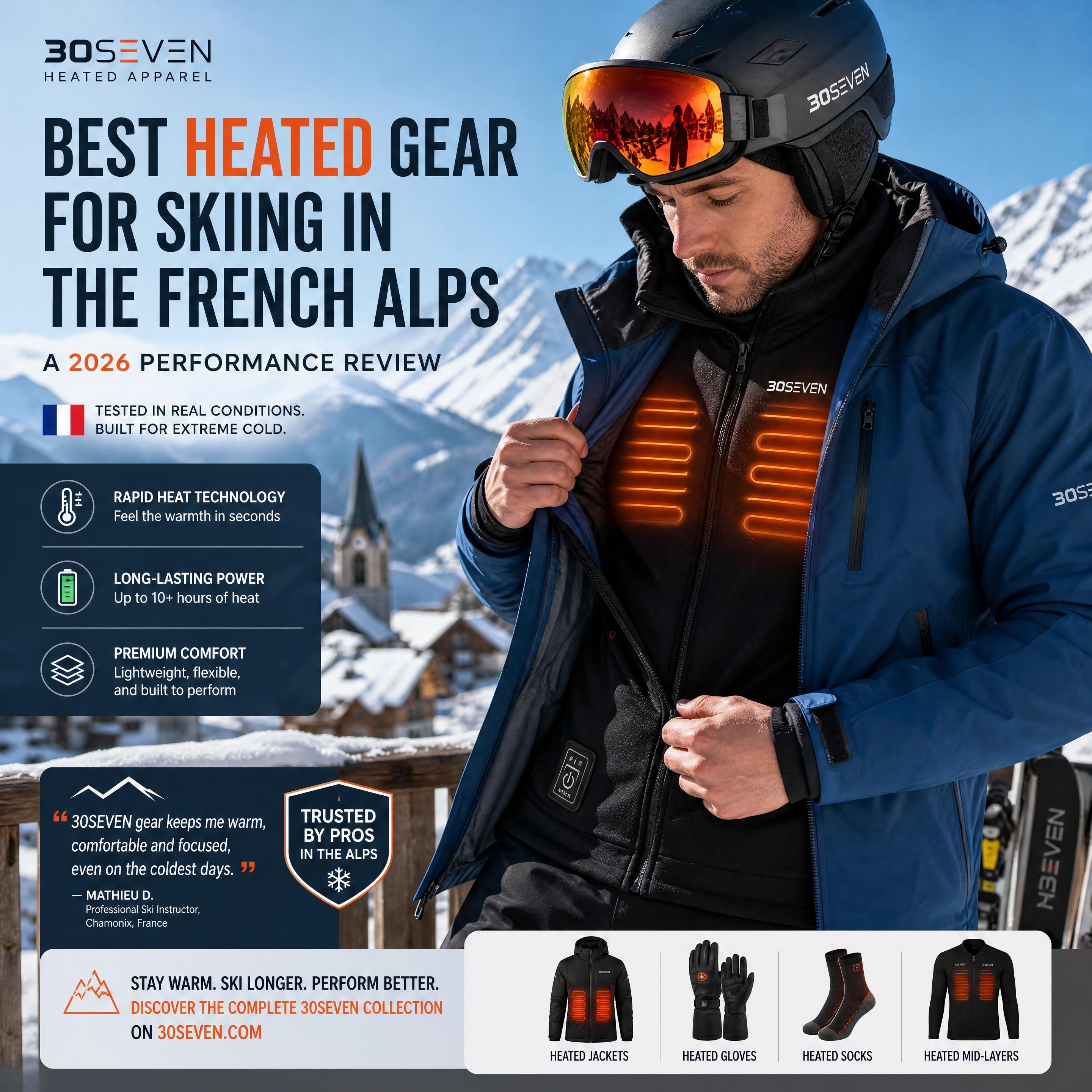
- A lightweight heated mid-layer
- A waterproof and breathable ski jacket
Use the heated layer selectively. Low heat may be enough while riding a lift, while switching the system off during strenuous descents can help prevent perspiration.
A heated mid-layer is also useful in areas where temperatures vary considerably, such as the route between a lower village and a high-altitude ski sector. This is relevant in destinations including Tignes, Les Arcs, Val d’Isère, Les 2 Alpes and Val Thorens.
30seven Heated Apparel: 2026 Performance Review
This review evaluates 30seven heated apparel according to the features most relevant to Alpine skiing: heat control, runtime, comfort, versatility and practical usability.
Heating control
30seven products are designed around Novaheat technology and provide adjustable warmth through integrated controls. Three heat levels are available on several heated glove models, allowing users to adapt the temperature throughout the day.
This is useful in real ski conditions because the coldest moment is not always during the descent. Lift rides, shaded pistes and exposed ridgelines often create the greatest need for additional warmth.
Battery performance
Published specifications for several 30seven heated glove models indicate approximately five to six hours of heating on a low setting and around two to three hours on a high setting. Some models list up to seven hours under lower-power use, depending on the product and conditions.
| Setting | Typical published runtime | Best use |
|---|---|---|
| Low | Approximately 5–7 hours | Full-day skiing and moderate cold |
| Medium | Variable by model | Lift rides and changing conditions |
| High | Approximately 2–3 hours | Very cold starts or exposed high-altitude terrain |
Cold temperatures can reduce battery performance, so keep spare batteries close to your body rather than in an exterior backpack pocket. Charge batteries fully before leaving your accommodation and avoid relying on maximum heat continuously.
📊 Approximately 5–7 hours on low and 2–3 hours on high, depending on model - 30seven heated glove runtime
Comfort and mobility
A heated glove must balance insulation with dexterity. 30seven offers different constructions, including waterproof, suede, leather and reinforced options. For skiing, a flexible waterproof model is generally the most practical choice, while reinforced designs may appeal to users who need additional durability.
The glove should allow you to:
- Grip ski poles securely
- Adjust helmet straps and jacket zippers
- Operate lift gates and phone controls where compatible
- Move your fingers without pressure
- Tighten or release equipment without removing the gloves
Versatility
One advantage of heated apparel is that it can serve more than one purpose. The same heated gloves may be useful for skiing in the French Alps, winter commuting, snowshoeing or watching outdoor events.
This versatility can improve the long-term value of the purchase, especially for people who spend several months each year in cold conditions.
"30seven heated gloves use Novaheat technology, rechargeable lithium-ion batteries and adjustable heat settings, with published runtimes depending on temperature level" — 30seven official product information
How to Choose Heated Gear for Different Alpine Conditions
For skiing in Chamonix
Chamonix combines resort skiing, high-altitude terrain and variable exposure. Heated gloves are a sensible priority, particularly for cold mornings and lift rides. A heated mid-layer can also help during lessons, ski touring or long periods spent outside the main ski runs.
For skiing in Val Thorens
Because of its high elevation, Val Thorens can feel significantly colder and windier than lower villages. Choose gloves with effective insulation and weather protection, then use the heating system on low or medium rather than depending only on maximum heat.
For skiing in Tignes or Val d’Isère
These resorts can experience changing conditions across open pistes and sheltered areas. Adjustable heated gloves are useful because the required temperature may change several times during a single run.
For skiing in Les 3 Vallées
Long lift connections and full-day itineraries make battery planning important. A low setting may be the most practical option for preserving runtime, with a spare battery available for exceptionally cold days.
For late-season skiing
Spring conditions can be warmer in the afternoon but still cold during early lifts, shaded terrain and high-altitude sectors. Heated apparel is best used selectively, particularly in the morning and during rest periods.
Battery Life and Practical Ski-Day Performance
Battery management can determine whether heated gear remains useful throughout the day.
Before skiing
- Charge every battery fully.
- Test the controls before leaving your accommodation.
- Check cables and connectors for damage.
- Confirm that batteries are compatible with the garment.
- Pack a spare set if you expect a long day or extreme cold.
During the day
Begin on a low setting whenever possible. Increase the temperature during lift rides, windy traverses or prolonged stops. Switching the heating off during active skiing can conserve energy and reduce perspiration.
At lunchtime
Use the break to assess battery levels and dry the garment if necessary. Do not place wet heated clothing directly on a radiator unless the manufacturer’s instructions specifically permit it.
"30seven recommends using the specified charger, disconnecting batteries when garments are not in use and charging batteries periodically during storage" — 30seven official product information
How to Wear Heated Clothing with a Ski Layering System
Heated gear works best when it complements, rather than replaces, traditional winter clothing.
Recommended upper-body system
- Base layer: Moisture-managing merino wool or synthetic fabric.
- Heated mid-layer: Lightweight heated jacket or vest when additional warmth is required.
- Insulating layer: Fleece or synthetic insulation for very cold days.
- Outer shell: Waterproof and breathable ski jacket.
Avoid placing a heated layer over a bulky insulating jacket. Heat should remain close to the body, while the outer shell protects against wind and snow.
For hands, pair heated gloves with a suitable ski jacket cuff and wrist seal. For feet, prioritize boot fit first, then add heated socks if cold toes remain a problem.
Care and Safety Tips
Heated apparel contains electrical components and rechargeable batteries, so proper care is essential.
- Follow the manufacturer’s washing and drying instructions.
- Disconnect batteries before cleaning or storing the garment.
- Use only the supplied or specified charger.
- Inspect cables, connectors and battery compartments regularly.
- Do not use damaged batteries.
- Keep batteries dry and protected from extreme heat.
- Store batteries according to the manufacturer’s recommendations.
- Recharge stored batteries periodically during the off-season.
- Do not sleep while wearing powered heated clothing.
- Stop using the garment if it becomes unusually hot or shows signs of damage.
Heated gear should support comfort, not replace safe skiing practices. Continue to use appropriate helmets, goggles, waterproof clothing and layers suited to the forecast.
Questions Fréquentes
What is the best heated gear for skiing in the French Alps?
For most skiers, heated gloves are the best starting point because hands are highly exposed to wind and cold. Heated socks are useful for cold toes, while a heated jacket or vest is most valuable during very cold days, ski touring or activities involving frequent stops.
Are 30seven heated gloves suitable for skiing?
Yes, selected 30seven heated glove models are designed for cold-weather outdoor use and offer adjustable heating, insulation and rechargeable batteries. Choose a model with suitable waterproof protection, flexibility and cuff compatibility for your ski jacket.
How long do heated ski gloves last on one charge?
Published 30seven specifications indicate approximately five to seven hours on lower settings and around two to three hours on high settings, depending on the model and conditions. Cold temperatures, battery age and continuous use at maximum heat can reduce runtime.
Should heated gloves be worn under or over ski jacket cuffs?
This depends on the glove design and jacket. Gauntlet-style heated gloves are generally worn over the jacket cuff, while shorter gloves may fit beneath it. The important point is to prevent snow and wind from entering while allowing unrestricted wrist movement.
Can heated clothing replace thermal layers?
No. Heated clothing should complement a complete ski layering system. A moisture-managing base layer, insulating layer and waterproof outer shell remain essential for comfort, weather protection and temperature management.
Chiffres Clés
📊 Up to approximately 5–7 hours of warmth may be available on low settings for selected 30seven heated glove models, depending on the product and conditions.
🔥 Three heat levels are available on several 30seven heated glove models, allowing skiers to adapt warmth during descents, lift rides and stops.
🔋 Approximately 2–4 hours may be needed to recharge certain 30seven lithium-ion battery systems, depending on the model and charger.
🏔️ One heated layer should never replace a complete ski clothing system: base layer, insulation and waterproof outer shell remain essential in the French Alps.
Conclusion
The best heated gear for skiing in the French Alps is not necessarily the garment with the highest maximum temperature. The strongest setup is the one that combines targeted warmth, practical battery life, comfortable fit and reliable weather protection.
For most skiers, 30seven heated gloves are the most useful first investment. They offer adjustable warmth for exposed hands, while heated socks can improve comfort for cold-sensitive feet. A heated jacket or mid-layer is best reserved for particularly cold conditions, ski touring, instruction or long periods spent outside.
Plan your battery use, keep your heated apparel close to the body and combine it with a proper technical layering system. With the right configuration, you can spend more time enjoying the pistes—from Chamonix to Val Thorens—and less time thinking about the cold.
Explore the complete range of 30seven heated apparel to find the right heated gloves, socks or jacket for your next ski trip in the French Alps.


