






How to Choose the Best Heated Jackets for Professional Outdoor Work in Winter

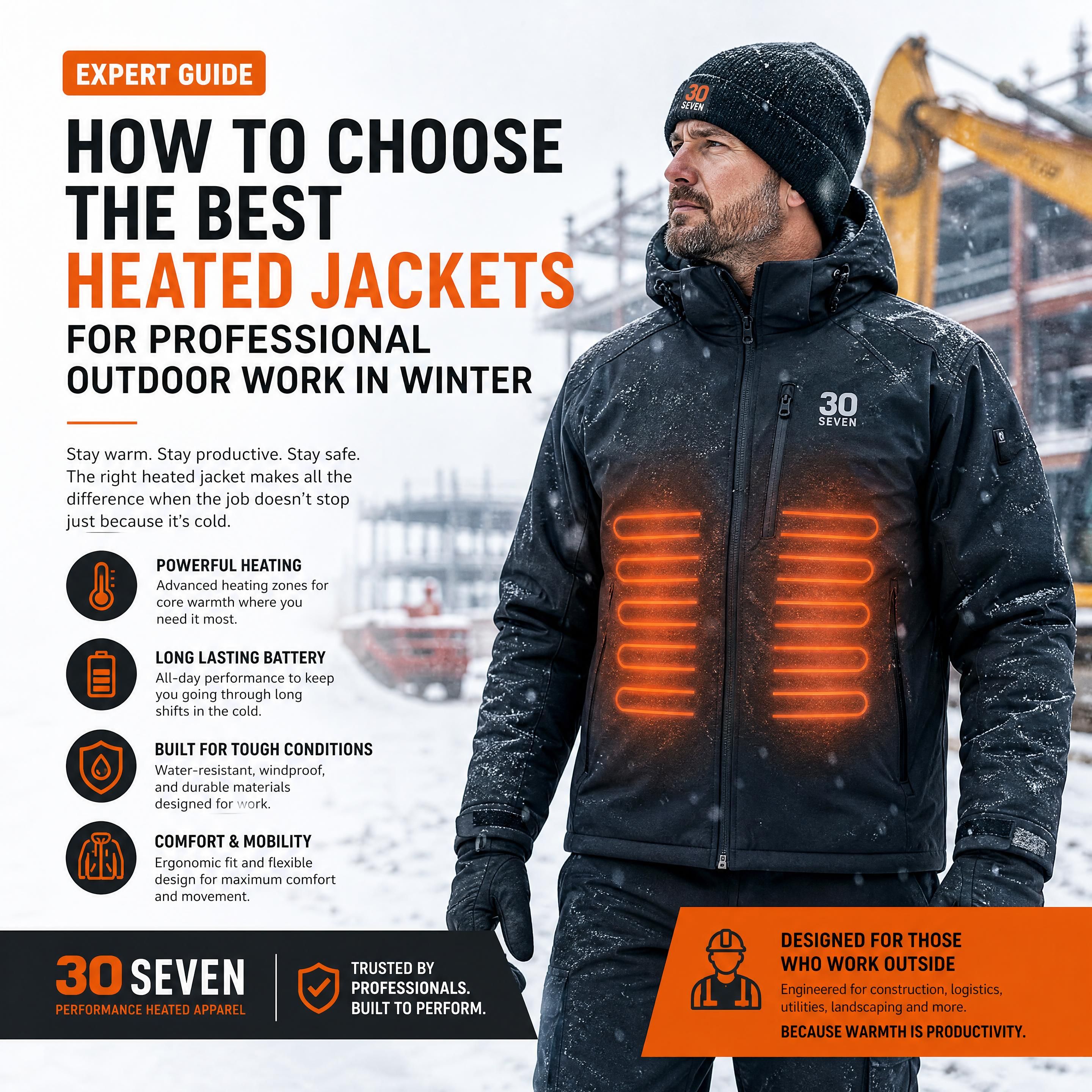
When winter temperatures fall, outdoor professionals need more than a standard winter coat. Construction crews, utility technicians, delivery drivers, agricultural workers, landscapers, surveyors, and maintenance teams must stay warm while moving, lifting, driving, and completing precise tasks.
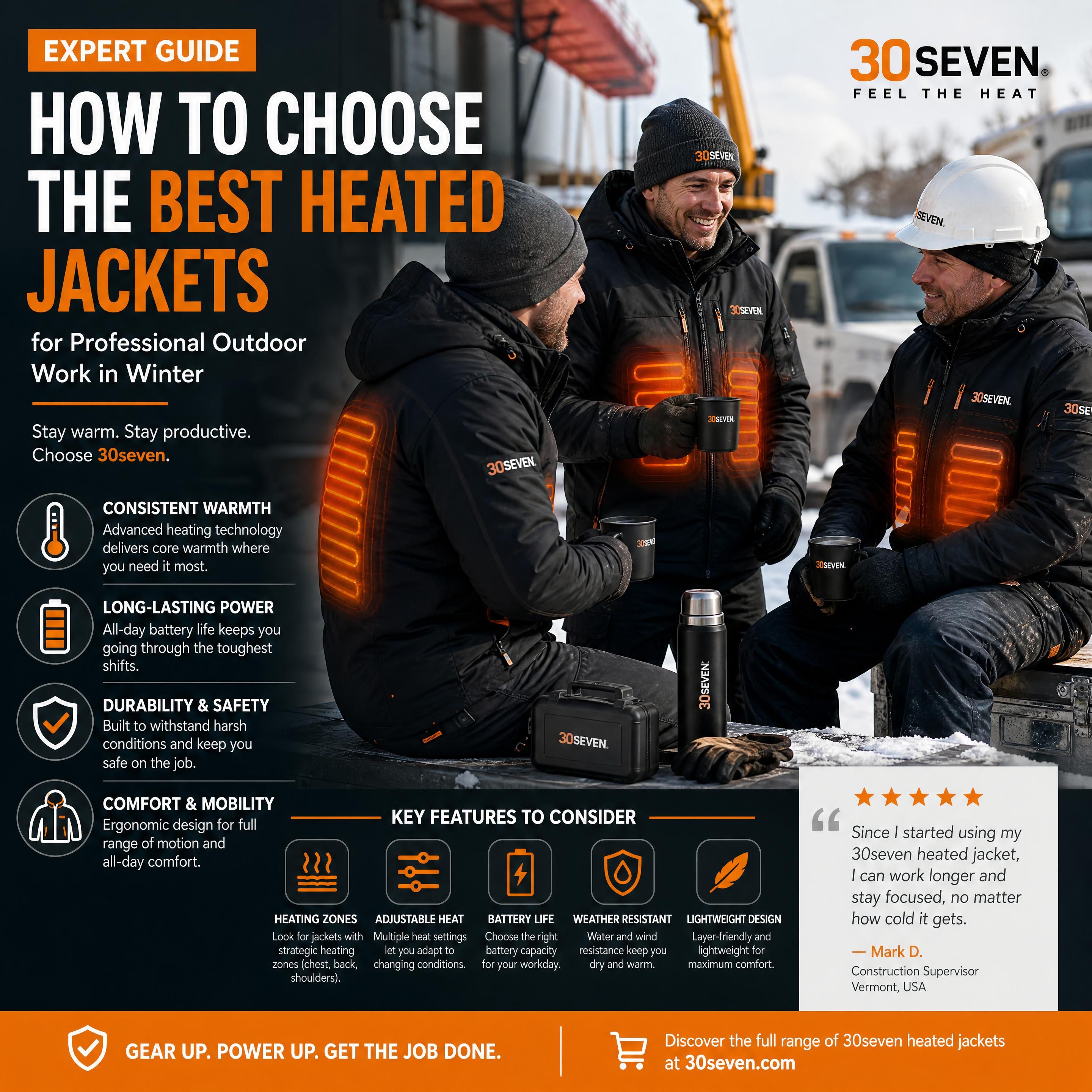
The best heated jacket for professional outdoor work combines active warmth, weather protection, freedom of movement, battery reliability, and workplace durability. It should complement—not replace—a proper cold-weather layering system and site-specific personal protective equipment.
This guide explains what to look for when comparing heated jackets and how 30seven heated apparel can support comfort and performance during long workdays in cold conditions.
📊 Wind chill increases the rate of heat loss from the body - Outdoor workers exposed to cold and wind may be at risk of cold stress
Table of Contents
- Why Professional Workers Need More Than a Standard Winter Jacket
- The Most Important Features in a Heated Work Jacket
- How to Compare Heated Jackets for Outdoor Jobs
- Why Consider 30seven Heated Apparel
- Choosing a Heated Jacket for Different Types of Work
- How to Use a Heated Jacket Safely and Efficiently
- Frequently Asked Questions
- Key Statistics
- Conclusion
Why Professional Workers Need More Than a Standard Winter Jacket
Traditional winter jackets rely on insulation and body heat retention. While these layers remain essential, they may not be enough when workers spend several hours outside in freezing temperatures, strong wind, rain, sleet, or snow.
Cold conditions can affect:
- Hand dexterity and grip strength
- Concentration and decision-making
- Physical comfort and endurance
- The ability to operate tools or machinery
- Mobility when wearing multiple bulky layers
- Overall productivity during long shifts
The risk is not limited to extremely cold climates. OSHA notes that cold stress can affect workers exposed to cold air, wind, wet conditions, and changing weather. Wind chill is especially important because it reflects how quickly the body loses heat in combination with low temperatures and wind.
"Outdoor workers should consider both air temperature and wind chill when assessing cold exposure risk." — Occupational Safety and Health Administration
A heated jacket provides an additional source of warmth through integrated heating elements powered by a rechargeable battery. Instead of relying only on thicker insulation, the worker can adjust heat according to activity level and weather conditions.
For example, a technician standing still while repairing outdoor equipment may need more warmth than a worker walking between job locations. Adjustable heated clothing allows both situations to be managed more comfortably.
The Most Important Features in a Heated Work Jacket
Not every heated jacket is designed for professional outdoor work. Before choosing a model, evaluate the following features.
1. Targeted Heating Zones
Heating zones should warm areas where heat loss is most noticeable and where warmth can improve overall comfort.
Common heating areas include:
- Chest
- Upper back
- Shoulders
- Neck
- Kidneys
- Lower back
- Handwarmer pockets
A jacket with strategically positioned heating elements can provide effective warmth without requiring excessive bulk. For workers who alternate between physical activity and stationary tasks, multiple zones are particularly useful.
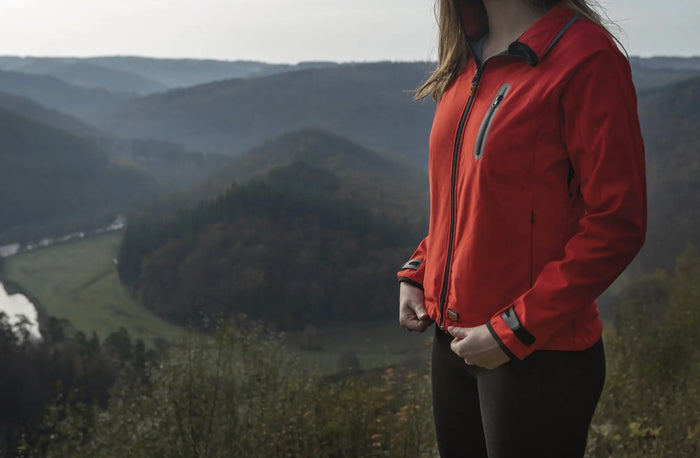
The 30seven heated jacket design includes heating around the neck, shoulders, kidneys, and lower back, helping support warmth across the upper body and core.
2. Adjustable Temperature Controls
Professional workers rarely experience identical conditions throughout a shift. Temperature settings should be easy to adjust while wearing gloves and should allow the user to reduce heat during strenuous activity.
Look for:
- Multiple heat levels
- Simple controls
- Clear power indicators
- Easy access to the control buttons
- Independent control of different jacket areas, where available
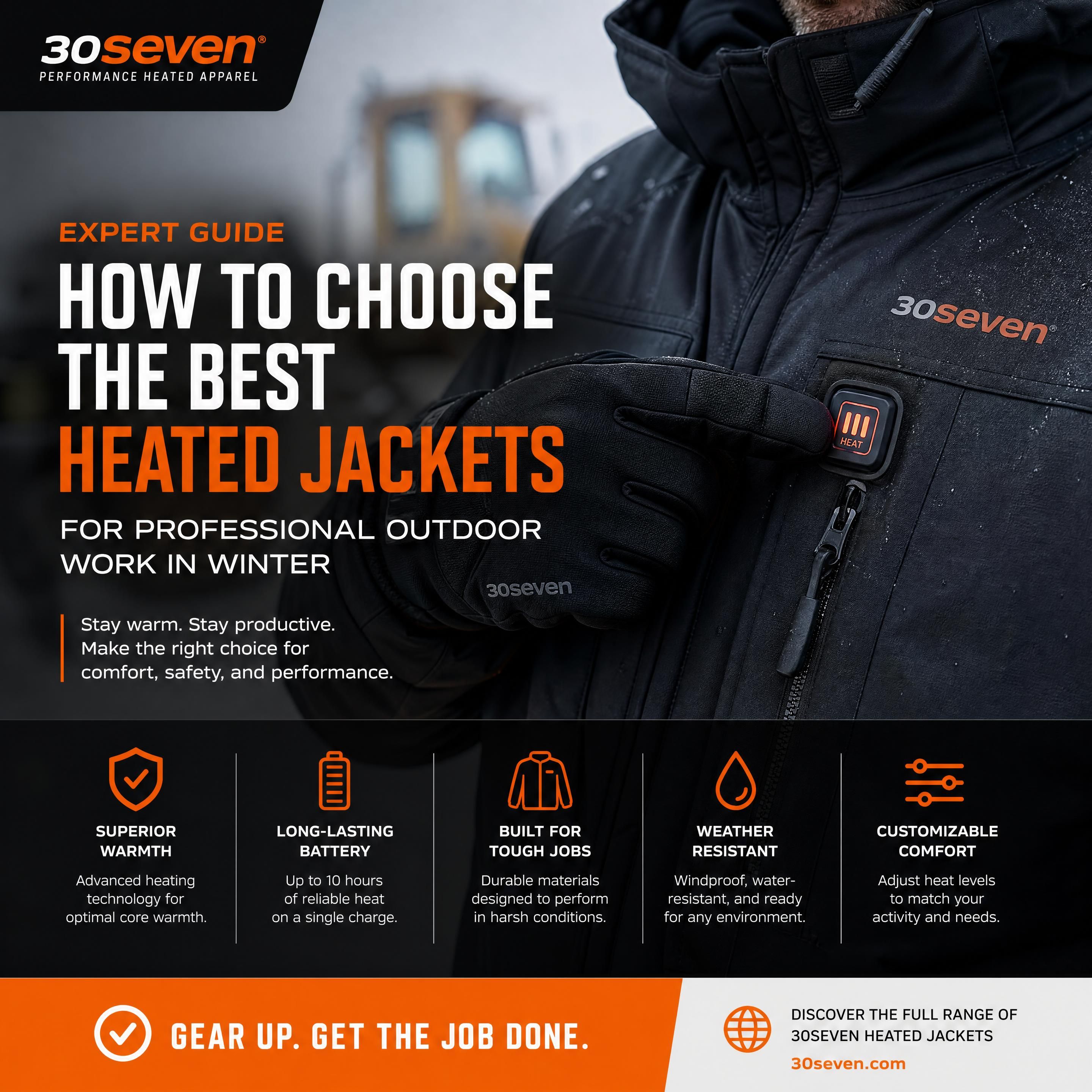
30seven heated apparel uses a flexible dual-powerbank system on selected jacket designs. This allows the upper and lower sections to be controlled separately, giving workers more control over comfort and battery use.
3. Battery Runtime That Matches the Workday
Battery runtime is one of the most important factors when selecting a heated work jacket. However, advertised runtime usually depends on the selected heat level, outside temperature, battery condition, and how often the jacket is switched on.
A practical battery assessment should consider:
| Question | Why It Matters |
|---|---|
| How long is the typical shift? | Determines whether one battery is sufficient |
| Is the worker stationary or active? | Stationary work often requires more heating |
| Are batteries replaceable? | A spare battery can extend the workday |
| Can the battery be recharged on site? | Useful for vehicles, depots, or temporary work areas |
| Is the battery compatible with common charging equipment? | Reduces the need for specialized chargers |
| Does the jacket use one or two power sources? | May allow separate control of heating zones |
According to 30seven’s product information, selected heated jackets provide up to three hours of continuous heating, use USB-C-compatible powerbanks, and can be paired with additional batteries for extended use.
📊 Up to 3 hours of continuous heating, depending on use and setting - 30seven heated jacket heating time
For a full winter workday, professional users should consider purchasing an additional compatible powerbank, planning charging intervals, or using the jacket primarily during the coldest parts of the shift.
4. Weather Resistance
Heating technology cannot compensate for a jacket that allows wind and moisture to penetrate. A heated work jacket should form part of a complete system that protects against:
- Wind chill
- Light rain
- Snow
- Damp air
- Splashes and job-site moisture
Check the manufacturer’s care instructions and water-resistance guidance before exposing the jacket to heavy precipitation. Water resistance is not always the same as waterproofing.
The ideal setup typically includes:
- A moisture-wicking base layer
- A warm mid-layer or heated jacket
- A wind-resistant and weather-protective outer layer when conditions require it
This layered approach helps workers adapt to changing activity levels and weather conditions without overheating.
5. Freedom of Movement
A professional jacket must allow workers to reach, bend, climb, drive, and operate tools. Excessive padding or poorly positioned battery packs can restrict movement.
Pay attention to:
- Flexible fabric panels
- Arm mobility
- Shoulder construction
- Jacket length
- Cuff adjustment
- Pocket placement
- Battery compartment location
- Compatibility with harnesses or tool belts
30seven describes selected heated jackets as thin and compact enough to wear over or underneath other clothing. This can be useful for workers who need to combine active heating with a protective outer shell.
6. Durability and Maintenance
Outdoor work can be demanding on clothing. A suitable heated jacket should withstand repeated use, movement, storage, and cleaning according to the manufacturer’s instructions.
Before purchasing, confirm:
- Whether the jacket is machine washable
- How the battery must be removed before washing
- Whether heating elements are integrated securely
- How zippers and seams are constructed
- Whether replacement powerbanks are available
- Whether the jacket can be repaired or maintained
30seven heated apparel uses an integrated heating element and a nylon outer and inner construction on selected jackets. Workers should always follow the official care instructions to protect both the fabric and the electrical components.
How to Compare Heated Jackets for Outdoor Jobs
A simple scoring system can help employers and individual professionals compare models objectively.
| Buying Factor | Basic Requirement | Professional-Level Consideration |
|---|---|---|
| Heating | One central heating area | Multiple targeted zones |
| Controls | Manual on/off button | Several heat levels or independent zones |
| Battery | Fixed or limited battery | Replaceable, rechargeable USB-C-compatible power source |
| Runtime | Suitable for short outdoor tasks | Matched to shift length and work pattern |
| Weather protection | Basic insulation | Layer-compatible wind and moisture protection |
| Fit | Comfortable when standing | Allows lifting, bending, climbing, and driving |
| Maintenance | Simple cleaning | Clear washing and battery-care instructions |
| Durability | Occasional outdoor use | Repeated use in demanding work environments |
| Safety | Basic electrical protection | Reputable manufacturer and clear operating instructions |
The “best heated jacket” is not necessarily the one with the highest number of heating zones or the largest battery. It is the model that matches the worker’s exposure, movement, shift length, and protective equipment.
Why Consider 30seven Heated Apparel
30seven focuses on practical heated clothing designed to provide warmth without unnecessary bulk. For professional outdoor users, several product characteristics may be particularly relevant.
Compact Design for Layering
A slim heated jacket can be worn as a mid-layer beneath a larger winter coat or as an outer layer in milder conditions. This versatility is useful when temperatures change during the day.
Core-Focused Heating
The heating areas around the neck, shoulders, kidneys, and lower back target regions that are important for perceived warmth during stationary work.
Flexible Power Management
Selected 30seven jackets use two powerbanks, allowing users to control upper and lower sections independently. This can help reduce energy consumption when only part of the jacket needs additional warmth.
USB-C Compatibility
Compatibility with USB-C powerbanks can simplify charging and replacement options. It may also be convenient for workers who already carry compatible charging equipment in a vehicle or workplace.
Practical Storage
Exterior zipped pockets can help protect connected batteries and provide space for small essentials. However, workers should ensure that battery cables and pockets do not interfere with tools, harnesses, or machinery.
"Selected 30seven heated jackets include integrated heating, targeted hot spots, zipped exterior pockets, and USB-C-compatible powerbank support." — 30seven
Choosing a Heated Jacket for Different Types of Work
Construction and Maintenance
Construction workers often alternate between physical activity and periods of waiting, measuring, supervising, or performing detailed tasks. A heated jacket with adjustable settings and a flexible fit can provide warmth without excessive insulation.
Prioritize:
- Durable outer fabric
- Easy controls
- Layering compatibility
- Secure battery storage
- Full arm and shoulder mobility
Utility and Telecommunications Work
Utility technicians may work in exposed locations, on ladders, near roads, or around equipment. The jacket should not restrict climbing or create loose components that could catch on machinery.
Prioritize:
- Close-fitting but comfortable design
- Low-profile battery storage
- Adjustable cuffs
- Compatibility with required high-visibility or protective garments
- Reliable operation in cold conditions
Delivery and Transportation
Drivers and delivery professionals may move repeatedly between a heated vehicle and cold outdoor environments. A lightweight heated jacket that warms quickly can be more practical than a heavy expedition coat.
Prioritize:
- Comfortable seated fit
- Easy on/off control
- Flexible layering
- Pockets that remain accessible while driving
- Spare battery options for long routes
Agriculture and Landscaping
Agricultural and landscaping workers may face damp conditions, early starts, and long periods outdoors. Moisture management is especially important because wet clothing can accelerate heat loss.
Prioritize:
- Moisture-resistant outer protection
- Breathable layers
- Easy cleaning
- Durable zippers and seams
- Heat settings that can be reduced during strenuous tasks
Snow Removal and Winter Services
Snow clearing crews face wind, moisture, and extended exposure. Heated clothing can improve comfort, but it must be combined with appropriate gloves, boots, head protection, visibility equipment, and planned warm-up breaks.
OSHA and NIOSH guidance emphasize monitoring workers, recognizing cold-stress symptoms, and reducing exposure where possible. A heated jacket should be considered one part of a broader winter safety plan—not a substitute for breaks, dry clothing, supervision, or emergency procedures.
📊 Employers should combine suitable clothing, worker monitoring, training, and warm-up breaks - Cold-weather protection requires more than heated clothing
How to Use a Heated Jacket Safely and Efficiently
Follow the manufacturer’s instructions every time you use heated apparel.
Before Starting Work
- Fully charge the powerbank.
- Check cables, connectors, and controls for visible damage.
- Confirm that the battery is correctly positioned.
- Wear a moisture-wicking base layer underneath.
- Make sure the jacket does not interfere with required PPE.
- Test the controls before leaving a warm building or vehicle.
During the Shift
- Start on a low or medium setting when possible.
- Increase heat during stationary periods.
- Reduce heat during strenuous activity to limit sweating.
- Keep the battery and connectors protected from moisture.
- Change damp clothing as soon as practical.
- Take warm-up breaks according to workplace procedures and weather conditions.
Sweating can create a second cold-weather problem: when damp clothing cools, it can increase heat loss. The goal is not to operate the jacket at maximum power continuously, but to maintain a comfortable and dry microclimate.
Recognize Cold-Stress Warning Signs
Symptoms such as numbness, intense shivering, confusion, slurred speech, unusual fatigue, or loss of coordination require immediate attention. Move the affected person to a warm, dry location and follow workplace emergency procedures. Serious symptoms require urgent medical assistance.
Frequently Asked Questions
Are heated jackets suitable for professional outdoor work?
Yes, heated jackets can be suitable for professional outdoor work when they provide an appropriate fit, reliable heating, practical battery management, and compatibility with required PPE. They should complement, not replace, insulation, weather protection, warm-up breaks, and workplace safety procedures.
How long does a heated jacket battery last?
Runtime depends on the jacket, powerbank capacity, heat setting, weather, and battery condition. Selected 30seven heated jackets provide up to three hours of continuous heating. Professionals working longer shifts should plan for recharging or carry an additional compatible powerbank.
Can I wear a heated jacket under a work coat?
Many slim heated jackets are designed to be worn underneath another jacket. This can create a flexible layering system for cold, windy, or wet conditions. Check the fit carefully so that the combination does not restrict movement or interfere with protective equipment.
Are heated jackets safe to wear while working?
Heated jackets from reputable manufacturers are designed for wearable use, but users must follow the product instructions. Inspect the battery, cables, and connectors before use, keep electrical components protected from moisture, and stop using the jacket if it shows signs of damage.
What is the best heated jacket for outdoor workers in Colorado or other cold regions?
The best heated jacket for professional outdoor work in Colorado, the northern United States, Canada, or another cold region should match local wind, precipitation, temperature, and job requirements. Focus on targeted heating, battery planning, weather protection, mobility, and compatibility with worksite PPE rather than choosing solely by temperature claims.
Key Statistics
📊 Up to 3 hours of continuous heating is listed for selected 30seven heated jackets, depending on operating conditions and settings.
Source: 30seven official product information
🌬️ Wind chill matters: OSHA explains that both air temperature and wind speed influence a worker’s cold exposure risk.
Source: Occupational Safety and Health Administration
🧥 Layering remains essential: Heated clothing works most effectively as part of a system that includes moisture management, insulation, and wind protection.
Source: CDC/NIOSH and OSHA cold-stress guidance
Conclusion
The best heated jacket for professional outdoor work in winter is one that delivers dependable warmth without compromising mobility, safety, or productivity. Before buying, assess the worker’s typical shift, exposure level, physical activity, battery needs, weather conditions, and required protective equipment.
Look for targeted heating zones, adjustable controls, practical battery management, a layer-friendly design, durable construction, and clear care instructions. 30seven heated apparel offers a compact approach to active warmth, with selected jackets featuring targeted heating around the neck, shoulders, kidneys, and lower back, plus USB-C-compatible powerbank support and flexible zone control.
For construction crews, utility technicians, delivery professionals, maintenance teams, and other outdoor workers, the right heated jacket can make cold-weather tasks more comfortable and manageable—while supporting a smarter, more adaptable winter workwear system. Explore the 30seven heated apparel range to find a practical solution for your professional cold-weather needs.


